
A dual-mode car head-up display can put speed, engine data, navigation details, and warning alerts closer to your line of sight. The models in this roundup combine GPS and OBD2 functions in different ways, giving drivers more flexibility across vehicle types.
We compare display clarity, compatibility, installation, information provided, and everyday usability so you can choose a HUD that fits your car and driving habits.
Best 10 Dual Mode Car Head Up Displays Picks for 2026
Best OBD Plug-and-Play Pick

- OBD II/EUOBD plug-and-play setup
- 3-inch anti-reflection display
- Speed, RPM, temperature, voltage, and alerts
Best For: Drivers wanting a straightforward OBD-compatible display
Best Large GPS Display

- 5.5-inch borderless display
- GPS and Beidou dual-mode chip
- 10+ layouts with speed and trip data
Best For: Drivers seeking a large GPS speedometer with flexible layouts
Best Feature-Rich OBD/GPS Gauge

- OBD2 and GPS dual-system operation
- Nine interface layouts
- Extensive readings and safety alerts
Best For: Drivers wanting detailed vehicle monitoring and customizable displays
Best Dual-System Value
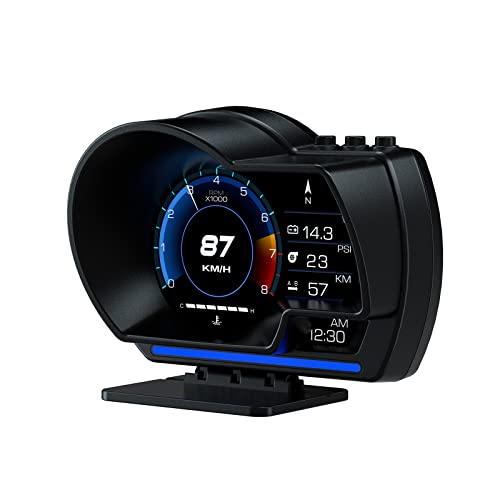
- OBD and GPS operation with GPS fallback
- Ten display interfaces
- Adjustable dashboard or windshield mounting
Best For: Drivers wanting flexible dual-system monitoring and easy installation
OBD Dashboard Companion
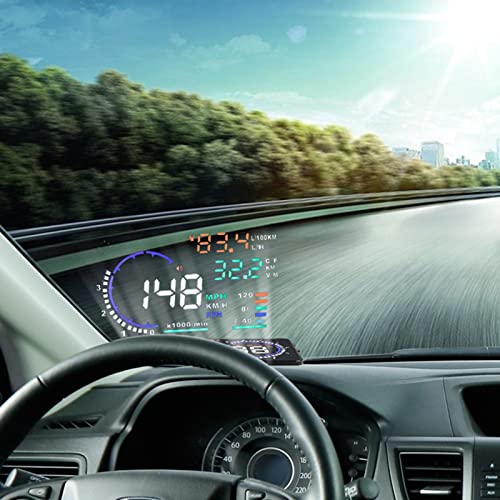
- Shows speed, RPM, temperature, voltage, fuel data, and fault codes
- Includes adjustable brightness and multiple warning alerts
- Requires an OBD II or EUOBD-compatible vehicle
Best For: Drivers wanting extensive vehicle information and reminders
GPS Plug-and-Play Pick

- Uses GPS+BDS positioning with a 10Hz refresh rate
- Runs from USB power without an OBD connection
- Large MPH display with automatic brightness adjustment
Best For: Drivers wanting simple, broadly compatible speed projection
Feature-Rich Dual-Mode Choice

- Monitors numerous vehicle metrics in OBD2/EOBD mode
- Adds gesture control, themes, alerts, and RGB lighting
- Supports 0–100 km/h and 100–0 km/h performance tests
Best For: Enthusiasts wanting detailed telemetry and customization
Diagnostic Dual-Mode Pick

- OBD2 and GPS operating modes
- Engine data and fault-code functions
- Custom alarms and display settings
Best For: Compatible vehicles needing detailed diagnostics and driving data
Connected Screen Pick
VIVIHUD V3-SE Wireless CarPlay HUD

- Wireless CarPlay and Android Auto
- HD anti-reflection display
- Portable installation for many vehicles
Best For: Older vehicles needing smartphone connectivity and a larger dashboard screen
All-Vehicle Value Pick

- GPS fallback with OBD2 mode
- Eight selectable display interfaces
- Multiple alerts and engine gauges
Best For: Drivers wanting flexible speed display coverage with optional vehicle data
Best OBD Plug-and-Play Pick – Dual Mode Car HUD
This compact dual mode car head up display is designed for vehicles using OBD II or EUOBD. It offers plug-and-play setup, a readable 3-inch screen, and automatic or manual power control for everyday driving.
Best For: Drivers wanting a straightforward OBD-compatible display for speed, engine, and basic vehicle data.
Pros:
- Automatically adapts to compatible OBD II or EUOBD vehicles.
- Displays speed, engine RPM, water temperature, battery voltage, and alerts.
- Supports kilometer/mile and Celsius/Fahrenheit switching.
- Nanotechnology helps reduce reflections for sharper information.
Cons:
- Compatibility depends on the vehicle having OBD II or EUOBD.
- The 3-inch screen is smaller than some competing displays.
Its broad selection of vehicle readings and simple installation make it a practical entry-level choice. Confirm your car’s diagnostic-system compatibility before ordering.
Best Large GPS Display – G12 Multifunction HUD
The G12 is a GPS-focused dual mode car head up display with GPS and Beidou satellite support. Its 5.5-inch borderless screen, multiple layouts, and USB plug-and-play installation suit drivers who prefer navigation-based speed and trip information.
Best For: Drivers seeking a large GPS speedometer with flexible screen layouts and simple USB installation.
Pros:
- GPS and Beidou dual-mode chip supports faster satellite searching.
- Offers more than ten display combinations for customization.
- Shows speed, time, mileage, driving direction, coordinates, and alerts.
- Includes a 360-degree rotating bracket for multiple mounting positions.
Cons:
- Its listed functions are centered on GPS data rather than vehicle OBD readings.
- Requires a USB connection for power.
With its larger screen and broad GPS feature set, the G12 is a useful option for drivers who want glanceable trip data without a lengthy installation. The one-year warranty adds support after purchase.
Best Feature-Rich OBD/GPS Gauge – Smart HUD Display
This dual mode car head up display combines OBD2 and GPS data, allowing GPS functions to appear alongside vehicle information in OBD mode. A 3.5-inch TFT color screen, nine interfaces, and extensive alarms make it suited to drivers who want detailed monitoring.
Best For: Drivers with compatible vehicles who want broad engine data, customizable layouts, and multiple alerts.
Pros:
- Combines OBD2 and GPS systems for more detailed information.
- Provides nine selectable interface layouts with automatic or manual brightness.
- Displays speed, RPM, mileage, voltage, fuel consumption, temperature, and more.
- Includes overspeed, voltage, temperature, RPM, fatigue, and fault-code alerts.
Cons:
- Requires a vehicle supporting the OBD2 protocol; the notes generally recommend models after 2012.
- Its many readings and interfaces may be more than some drivers need.
This is one of the more comprehensive options in the group, particularly for users who value diagnostic information and configurable alarms. Check OBD2 compatibility before purchase.
Best Dual-System Value – P6 OBD2 Gauge HUD
The P6 combines OBD and GPS in a dual mode car head up display that can show vehicle data and GPS information together. Its ten interfaces, adjustable bracket, automatic brightness, and color-changing overspeed alert provide a practical setup for everyday monitoring.
Best For: Drivers wanting a dual-system gauge with multiple layouts, adjustable mounting, and basic warning functions.
Pros:
- Uses OBD and GPS together, with GPS fallback when OBD2 is unavailable.
- Offers ten selectable interfaces and access to extensive OBD data.
- Supports dashboard or windshield installation with an adjustable bracket.
- Changes ambient lighting from blue to red for overspeed warnings.
Cons:
- Vehicle data features require OBD2; non-compatible vehicles use GPS functions only.
- The supplied product description does not specify a screen size.
The P6 is a versatile choice for shoppers who want both compatibility backup and broad vehicle readings. Its included mounting accessories also make installation flexible without permanent modification.
OBD Dashboard Companion – 5.5-Inch Multi-Color OBD HUD
This OBD-based option is a practical pick among dual mode car head up displays for drivers who want more than speed information. It can show vehicle data such as RPM, coolant temperature, voltage, fuel consumption, mileage, and fault codes, while adjustable brightness and overspeed alerts support easier viewing.
Best For: Drivers with OBD II or EUOBD-compatible vehicles who want broad dashboard data and configurable safety reminders.
Pros:
- Displays speed, RPM, water temperature, voltage, fuel-use data, mileage, and fault codes.
- Offers manually adjustable brightness plus automatic brightness optimization.
- Provides overspeed, high-temperature, low-voltage, fatigue-driving, and shift reminders.
- Automatically powers on with the vehicle and shuts down when the car is turned off.
Cons:
- Requires an OBD II or EUOBD-compatible vehicle.
- Its broad data set may be more than drivers who only want a simple speed display need.
Choose this model when vehicle compatibility is confirmed and you value diagnostic-style information in addition to projected speed. Its 180-day return guarantee adds useful purchase reassurance.
GPS Plug-and-Play Pick – K1 GPS Car HUD
For shoppers comparing dual mode car head up displays without wanting an OBD connection, this GPS model keeps installation simple. It uses GPS and BDS positioning, draws power through a 5V USB connection, and projects large MPH speed information with automatic brightness adjustment.
Best For: Drivers seeking a simple speed-focused HUD for cars, trucks, or motorcycles with a USB port.
Pros:
- Uses dual-mode GPS and BDS positioning with a 10Hz refresh rate.
- USB-powered and does not require an OBD port.
- Large, anti-reflective speed display is designed for easy reading.
- Automatic brightness adjustment helps accommodate daytime and nighttime conditions.
Cons:
- GPS speed can vary by approximately 0.6–1.8 MPH.
- Performance may be affected in tunnels, underground garages, heavy rain or fog, and with metallic windshield film.
- Speed is listed in MPH by default and the supplied notes do not specify broader vehicle data.
This is a sensible choice if you want quick, USB-powered setup and a clear speed readout rather than an information-heavy OBD dashboard. Account for satellite-signal limitations when deciding where you drive most often.
Feature-Rich Dual-Mode Choice – OBD2+GPS Performance HUD
This OBD2+GPS model stands out among dual mode car head up displays by combining extensive vehicle monitoring with a customizable interface. In OBD2/EOBD mode, it can show speed, RPM, coolant temperature, voltage, fuel consumption, compass, turbo pressure, and altitude, while gesture control, warning notifications, and performance tests add extra functionality.
Best For: Enthusiasts who want detailed vehicle data, customization, gesture controls, and acceleration or braking tests.
Pros:
- Displays a wide range of data, including speed, RPM, temperature, voltage, turbo pressure, and altitude.
- Offers a 3.5-inch HD screen, 13 UI themes, 68 car logos, and 15 languages.
- Gesture control enables contact-free page switching.
- Adds overspeed, overheat, voltage, fatigue alerts, RGB lighting, and performance testing.
Cons:
- The full data display is available only in OBD2/EOBD mode.
- Its many settings and features may be excessive for drivers seeking a basic HUD.
- Some advertised functions depend on vehicle compatibility and setup.
Consider this model when customization and vehicle telemetry matter as much as the projected readout. The rotating bracket and included Type-C OBD cable support installation, while the feature set is best suited to buyers willing to spend time configuring the display.
Diagnostic Dual-Mode Pick – MH OBD2+GPS Head-Up Display
For drivers comparing dual mode car head up displays, this MH unit combines OBD2 vehicle data with GPS-based information. It can show speed, RPM, water temperature, voltage, fuel consumption, altitude, mileage, and other data, while also offering fault-code scanning and customizable alarms.
Best For: Drivers with a compatible OBDII/EOBD vehicle who want detailed engine data and diagnostic functions.
Pros:
- Switches between OBD2 diagnostics and GPS mode.
- Displays extensive driving data, including RPM, temperature, voltage, and turbo pressure.
- Can scan and clear engine fault codes and run acceleration or brake tests.
- Offers adjustable brightness, units, interfaces, and multiple alert thresholds.
Cons:
- OBD2 features require a compatible OBDII/EOBD vehicle produced after 2008.
- Diesel, hybrid, pickup, RV, modified, and several listed vehicle brands are excluded from compatibility.
- GPS mode provides fewer vehicle-specific diagnostics than OBD2 mode.
This is the most feature-focused option here for buyers who want a compact display that doubles as a basic diagnostic tool. Verify vehicle compatibility before relying on its OBD2 functions.
Connected Screen Pick – VIVIHUD V3-SE Wireless CarPlay HUD
Among dual mode car head up displays, the VIVIHUD V3-SE stands out as a connected dashboard replacement rather than a traditional gauge-only unit. It adds wireless Apple CarPlay and Android Auto, Bluetooth audio, hands-free calling, screen mirroring, and GPS/OBD2 speed information in a portable plug-and-play design.
Best For: Drivers of older vehicles who want modern smartphone connectivity without replacing the factory screen.
Pros:
- Supports wireless Apple CarPlay and Android Auto.
- Works with cars, SUVs, pickups, vans, RVs, and older vehicles without built-in CarPlay.
- HD anti-reflection display is designed for daylight, tunnels, rain, and nighttime use.
- Includes adjustable viewing angle, non-slip mounting, Bluetooth audio, and hands-free calls.
Cons:
- Smartphone connectivity depends on a compatible iPhone or Android device.
- Its feature set may be more than needed for shoppers seeking only speed and engine gauges.
- The supplied notes do not specify the full range of OBD2 data or diagnostic functions.
This is the strongest choice for upgrading an older vehicle with navigation, music, calls, and a separate display. Choose it over a diagnostic-focused HUD if smartphone integration is your priority.
All-Vehicle Value Pick – GPS+OBD2 Smart Gauge HUD
This GPS+OBD2 unit is a practical option for shoppers seeking dual mode car head up displays with broad vehicle coverage. It can use OBD2 for expanded engine information or switch to GPS mode when the vehicle lacks compatible OBD support, with multiple interfaces for simple or detailed viewing.
Best For: Drivers who want flexible speed display coverage plus optional engine gauges and driving tests.
Pros:
- Offers both OBD2 and GPS modes for broader vehicle compatibility.
- Displays speed, RPM, water temperature, voltage, fuel consumption, and trip information in OBD2 mode.
- Includes overspeed, engine-failure, water-temperature, and voltage alerts.
- Provides eight display interfaces, automatic or manual brightness, and two installation methods.
Cons:
- Detailed engine data depends on using a compatible OBD2 connection.
- The display and controls may feel busy when using the full-function interface.
- The supplied notes do not provide a specific vehicle-year compatibility cutoff.
With GPS fallback and a broad selection of gauges, this model is a versatile middle ground for buyers unsure how well their vehicle will support OBD2. It is especially useful when speed visibility is the main goal but extra engine data is welcome.
How We Picked the Best Dual Mode Car Head Up Displays
We focused on models that support both GPS and OBD2 operation, or offer a practical dual-system setup. That matters because GPS mode can work in more vehicles, while OBD2 mode may provide richer information such as RPM, coolant temperature, voltage, fault alerts, and engine data.
We also considered installation method, screen readability, supported speed units, warning features, display flexibility, and the likelihood of compatibility with common passenger vehicles. Because product specifications can vary by model and vehicle, verify the connector type, supported protocols, and included accessories before ordering.
Quick Comparison
| Feature | What to look for |
|---|---|
| Data sources | GPS for broad compatibility; OBD2 for vehicle-specific information |
| Display | Clear numbers, adjustable brightness, and readable colors in daylight |
| Alerts | Overspeed, fatigue, fault, voltage, or temperature warnings |
| Installation | Plug-and-play USB or OBD2 connection with minimal setup |
| Extra functions | RPM, mileage, clock, water temperature, voltage, or navigation support |
Key Buying Factors for Dual-Mode Car Head-Up Displays
GPS and OBD2 Compatibility
GPS mode is generally the safer choice for older, imported, or uncertain-fit vehicles because it does not depend on the car’s diagnostic protocol. OBD2 mode is preferable when you want engine readings, but confirm that your vehicle uses a compatible OBD2 or EOBD port and supports the listed data.
Readability and Screen Placement
Choose a display with large digits, brightness adjustment, and a projection angle that works with your dashboard. A windshield reflector can be easy to read, while a dashboard screen may reduce glare for some drivers. Avoid positioning the unit where it blocks road visibility.
Useful Alerts and Measurements
Overspeed alarms are common, but RPM, voltage, coolant temperature, fault codes, and fatigue reminders vary. Select only the measurements you will actually use; too much information can become distracting.
Power and Setup
Check whether the unit uses USB, a 12-volt socket, or the OBD2 port for power. Look for clear instructions, automatic startup, adjustable units such as MPH or km/h, and a cable long enough for tidy placement.
Who Should Buy Which Dual Mode Car Head Up Displays?
Choose a GPS-focused dual-mode display if you drive multiple vehicles, own an older car, or want the simplest installation. Pick an OBD2+GPS model if you want engine information alongside speed and can confirm compatibility. Drivers who prioritize RPM, temperature, voltage, and fault data should look for a multifunction OBD2 gauge. If you want a larger, more modern interface, consider a model with a cluster-style screen or wireless smartphone connectivity. Whichever option you choose, treat the display as a supplemental aid and keep your attention on the road.